

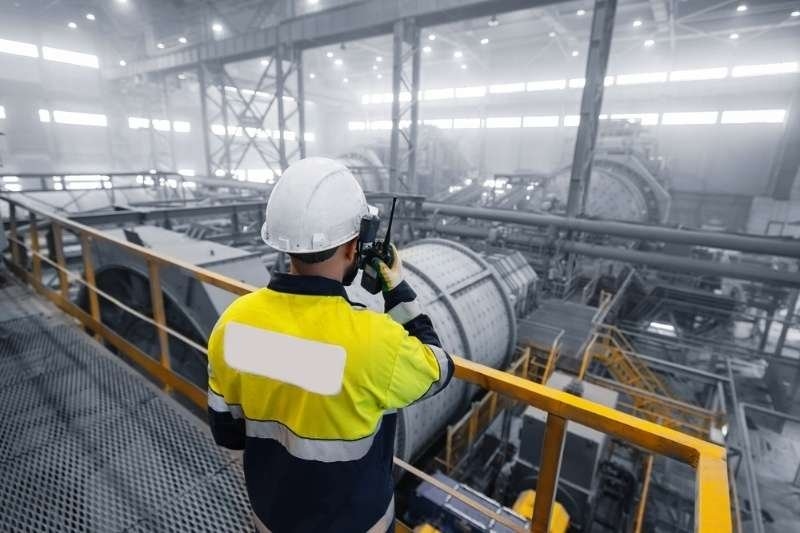
Mineral processing sits between mining and making usable products. You don’t just pull ore out of the ground and sell it—it’s mixed up with waste rock, water, and sometimes multiple valuable minerals all jumbled together. The goal: concentrate what you want and lose as little as you can.
There's no single way to process ore because every deposit is different. One ore needs flotation; another responds to magnets. The process includes crushing, grinding, washing, and separation—it all depends on the minerals and how they behave.
What is mineral processing? It is the treatment of mined material to separate valuable minerals from gangue and produce a concentrate or other usable product. The process normally uses physical or chemical differences between minerals rather than changing the minerals themselves.
A typical circuit may include crushing, screening, grinding, classification, concentration, dewatering, and waste handling. Not every plant uses every stage. The target is simple: recover more value from less material.
Why are minerals processed before they reach downstream industries? Run-of-mine ore often contains too much unwanted material for economical transport, smelting, refining, or manufacturing.
Processing can raise the valuable mineral content, reduce transport volumes, and prepare feed for later treatment. It also gets rid of annoying impurities.
Read More: Feldspar: The Mineral Powering Glass, Ceramics & Industry
Ore dressing kicks off with breaking down big chunks and then moves to sorting and improving the product. The order really depends on how easy the minerals are to separate and their physical traits.
Crushers handle the heavy lifting in the beginning—first primary, then secondary. You might use jaw, gyratory, cone, or impact crushers, all depending on how tough the ore is and what size you want at the end.
Screens then classify particles. Oversized material can return to crushing while correctly sized material moves forward.
Grinding takes size reduction further so valuable minerals become liberated from surrounding gangue. Ball mills, rod mills, and stirred mills are common choices, depending on the application.
Grinding is often one of the largest energy consumers in a processing plant. Excessive grinding wastes energy; insufficient grinding leaves valuable minerals locked inside larger particles.
There is no universal separation method. Mineral processing engineers don’t just guess; they pick techniques based on density, magnetic traits, surface chemistry, particle size, and a bunch of other details.
Gravity separation only works if the valuable minerals and the waste rock have noticeably different densities. For that, operators turn to jigs, shaking tables, spirals, or even centrifugal concentrators.
This method fits best for heavy minerals and bigger particles. You definitely need to keep an eye on water flow and particle size. If you don’t, separation gets sloppy and your efficiency tanks.
Magnetic separation is all about how minerals respond to magnets. Strongly magnetic minerals get pulled out with simple equipment, but for weaker magnetic materials, you need machines that crank up the intensity.
Iron ore processing is a major application. Dry and wet magnetic separators are selected according to ore characteristics, moisture, particle size, and required recovery.
Flotation is widely used for sulphide ores and several other mineral systems. Chemicals modify mineral surfaces so selected particles attach to air bubbles and rise into a froth.
The process depends heavily on reagent selection, pH, particle size, water chemistry, and operating conditions. Small changes can affect recovery and concentrate quality.
Suggested Reading: Understanding Mineral Trade Policies in Global Markets
Choosing mineral processing equipment is not simply about buying the largest machine. Equipment must match feed characteristics, throughput, maintenance needs, energy limits, and the desired product.
| Equipment | Main Function | Typical Consideration |
|---|---|---|
| Jaw crusher | Primary crushing | Large feed and hard rock |
| Cone crusher | Secondary or tertiary crushing | Controlled product size |
| Ball mill | Fine grinding | Energy demand and liberation |
| Vibrating screen | Size classification | Capacity and separation efficiency |
| Magnetic separator | Magnetic concentration | Mineral susceptibility |
| Flotation cell | Froth separation | Reagent and pulp conditions |
| Thickener | Solid-liquid separation | Settling and water recovery |
A well-designed circuit uses equipment as a connected system. One poorly matched stage can restrict everything after it.
Modern mineral processing is increasingly focused on recovery, energy use, water consumption, and waste reduction together. Higher recovery is valuable only when the additional cost and environmental burden make sense.
Classification determines which particles continue to separation stages. Poor classification can send coarse liberated particles into inefficient circuits or create unnecessary fines.
Cyclones, screens, and other classifiers therefore have a larger role than their simple appearance suggests. Better control can improve downstream performance without replacing the entire plant.
Grinding can consume substantial energy, while wet processing can require significant water movement and treatment. Plants increasingly look at recirculation, dewatering, process control, and more efficient grinding technologies.
The goal is not simply maximum output. It is useful output at a reasonable resource cost.
The future of mineral processing is being shaped by ore variability, stricter environmental expectations, automation, and demand for critical minerals. Today, processing plants have to squeeze value out of increasingly tough and complex deposits.
Sensor-based sorting helps chuck out waste sooner in some cases. Digital monitoring lets you keep tabs on your equipment. Advanced process control steps in to tweak variables whenever the feed changes.
Future plants are likely to put more attention on coarse particle recovery, water reuse, energy-efficient comminution, and data-driven control. The rise of critical minerals also increases pressure to process lower-grade and more complicated ores economically.
For operators, the practical question is not whether technology looks impressive. It is whether it improves recovery, reliability, safety, or cost under actual plant conditions.
Also Read: Copper Minerals: Essential for Industry & Mining Growth
If you simply keep throwing machines at an ore, you won’t get the best results or save money. Crushing should set up grinding to break minerals free, and then the separation stage has to suit the mineral’s characteristics. All those machines need to operate together as a single system.
The best mineral processing plants strike a balance between recovery, throughput, energy use, water use, maintenance, and quality. That’s become trickier as ores are lower grade and more complex. Still, better classification, automation, smarter controls, and selective separation help. Mineral processing will keep turning raw, mined material into valuable products—and cut waste and resource use in the process.
When ore grade drops, you end up processing more material just to get the same amount of valuable mineral. That eats up energy, water, and transport and wears down your equipment.
Mineralogy tells you how minerals are arranged, what size fragments you need for separation, and what properties you can use to separate them. Detailed tests shape the whole design of the processing circuit.
Sure, they can, but you really have to stay flexible. If the feed shifts, you might find yourself tinkering with grinding, playing with reagent amounts, managing water in new ways, or even adjusting separation settings—all just to keep the plant steady.
It usually goes by “tailings” or “coarse refuse". Handling this waste safely is a must. Most places thicken or filter it, stash it away, recover as much water as they can, and keep a close eye on everything.
Plants track measures like recovery, concentrate grade, throughput, energy use, water use, and equipment uptime. The smartest plants look at several numbers together, instead of focusing on only one. That gives a clearer picture of how everything’s working.
This content was created by AI